Product Description
On the other hand, organic compounds are derived from the metabolism of living beings, and their basic structure consists of chains of carbon and hydrogen atoms. These include all derivatives from the plant and animal world, including petroleum and the compounds obtained from it.
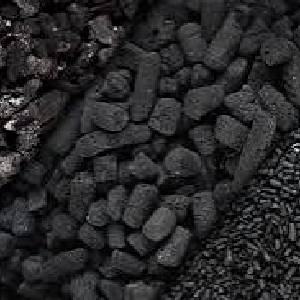
The property of a solid to adhere a flowing molecule to its walls is called “adsorption”. The solid is called “adsorbent” and the molecule, “adsorbate”.
After filtration, which aims to retain solids in a fluid, there is no single purification process with more applications than activated carbon.
Keep reading this complete guide to know how activated carbon works, its main applications, and if you read to the end you will find a complete table with references to articles specific to each characteristic of activated carbon. The topics we will address are as follows:
1. What is activated carbon?
2. What is activated carbon used for?
3. Where can activated carbon be obtained?
4. How does activated carbon work?
5. From which raw materials can activated carbon be obtained?
6. Coconut husk charcoal
7. Mineral coals.
8. What is the adsorption capacity of activated carbon?
9. How does activated carbon work in dechlorination?
10. Which type of activated carbon is the most suitable for water purification?
11. Which type of activated carbon is the most suitable for purifying air and gases?
What is activated carbon used for?
● Water purification.
(carbon retains pesticides, greases, oils, detergents, disinfection by-products, toxins, color-producing compounds, compounds originating from the decomposition of algae and plants or from animal metabolism…).
● Deodorization and air purification.
For example: in cartridge respirators, air recirculation systems in public spaces, drain vents and water treatment plants, paint application booths, spaces that store or apply organic solvents.
● Treatment of people with acute intoxication.
Activated charcoal is considered the “most universal antidote”, and is applied in emergency rooms and hospitals.
● Sugar refining.
The charcoal retains the proteins that give color to the cane juice; the fundamental objective of this process is to prevent the sugar from fermenting and spoiling.
● Discoloration of vegetable oils.
(such as coconut). Corn glucose and other liquids intended for food.
● Discoloration and deodorization of alcoholic beverages.
(such as grape wines and distillates of any origin)
● Gold recovery.
Gold that cannot be separated from minerals by flotation processes is dissolved in sodium cyanide and adsorbed on activated carbon.
 Dutch
Dutch  English
  Arabic
  French
  German
  Italian
  Japanese
  Korean
  Russian
  Spanish