Mar . 27, 2024 10:14 Back to list

5 micron pp filter-How we choose the best air purifiers

How we choose the best air purifiers
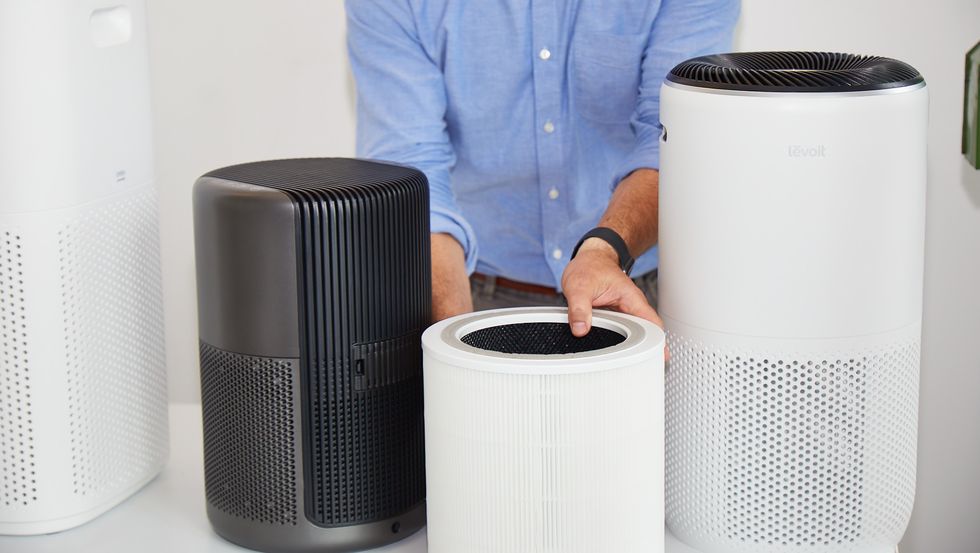
a batch of air purifiers undergoes testing at the good housekeeping institute

Our product experts start by surveying the current marketplace to identify the best air purifiers that you’re most likely to find at stores and online. We also attend trade shows and industry events, like the Consumer Electronics Show (CES) to stay on top of the latest innovations in indoor air quality.

Next, we identify brands that have performed the best and proved the most reliable through more than a decade of air purifier testing at the Good Housekeeping Institute. We also consider newer brands with unique features or innovations.

Based on an extensive preliminary review of technical data, including claimed coverage area and type of filtration, our review team selected various 2023 models for hands-on testing, which took place both in our Lab and homes, the latter allowing us to test how they performed in real-world conditions. Controlled Lab tests measured an air purifier's ability to capture specific contaminants, such as smoke and other VOCs (volatile organic compounds). At-home testing checks for general improvement of freshness, as well as overall usability.

Our consumer testers measure factors like ease of setup, intuitiveness of controls and how uncomplicated it is to locate and replace the filter (or clean it, when applicable). Following the combined 50-plus hours of data review, Lab testing and at-home evaluations, we arrived at our list of best air purifiers out of 45 reviewed models.
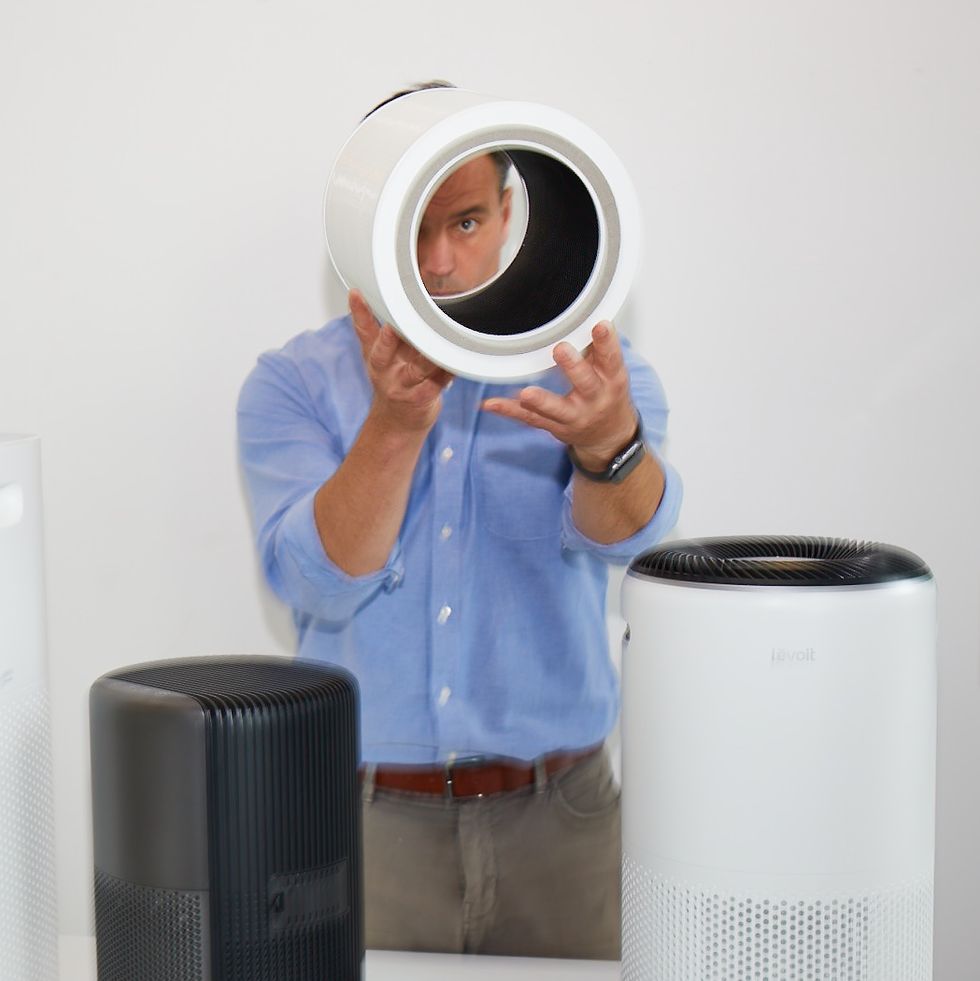
a product expert evaluates filters as part of good housekeeping's review of air purifiers

As part of our 2023 air purifier tests, experts closely evaluated the filtration systems, including the type of materials used and how easy each filter was to replace. Models with multi-stage purification, including a True HEPA filter, were best at capturing airborne pollutants.

10 inch CTO GAC UDF Activated Active Carbon Block Filter for water purifier

How to choose the best air purifier for your home

To zero in on the ideal air purifier for your needs, weigh the following factors:

✔️ Coverage area: Manufacturers typically list how much square footage a purifier is designed to cover. You might see multiple areas listed, say, one for the coverage provided in one hour and another for the coverage provided in five hours. Our experts recommend paying attention to the lower number since you'll likely want a device that delivers quick purification.

✔️ Filtration: Most top-performing air purifiers use mechanical filters with a dense web of fine fibers that trap particles from the air as it is pushed through by a fan.

  • True HEPA filters use a very fine mesh certified to capture 99.97% of particles measuring at least 0.3 microns (and in some cases down to 0.1 microns) in diameter. Our bottom-line advice is that the best cleaning power comes from a True HEPA filter.
  • "HEPA-like" filters have not been certified to meet that standard. Some air purifiers also have a pre-filter designed to capture dust and other larger particulates. Our experts like this feature.
  • Other filtration technologies are harder to evaluate, including those that incorporate activated carbon and ultraviolet light. We don't test these technologies specifically, so we can't attest to their efficacy.

✔️ Operating costs. The main consideration here is the price of replacement filters, which can range from $20 or less to $100 and up. Since you might need to replace the filters a few times a year, depending on your home's air quality, the expense can add up. Some air purifiers also have special cleaning kits designed to eliminate mineral build-up inside the machine, adding further to the operating costs.

Do air purifiers really work?

In short, yes, air purifiers work. In order to clean the air, these appliances use filters and fans to remove particles and circulate the purified air back into the room.

They can improve air quality and help you breathe easier. People suffering from allergies or asthma might find air purifiers with High-Efficiency Particulate Air (HEPA) filters particularly helpful because they remove common allergens and fine particles (99.97% of those measuring 0.3 microns in diameter in a lab setting, according to industry standards) from the air.

Not all air purifiers meet that high bar. For example, the much-hyped, sleek-looking IKEA Förnuftig can only capture 99.5% of smaller airborne particles. Even 2023 air purifiers that excel at removing particles like dust, smoke and pollen are limited in their ability to capture smaller toxins, such as those from cleaning products and paint.

One more thing to note: The effectiveness of air purifiers in real-world situations likely won’t mimic those of controlled conditions in a lab. That means it can be difficult to measure an air purifier’s true efficacy of how it will perform in your home.

Do air purifiers protect against smoke from wildfires?

Microscopic particles in smoke can trigger a range of health issues, from burning eyes to chronic lung disease, according to the U.S. Environmental Protection Agency, but "generally, outside pollution or smoke or temporary bad air isn't a constant concern for bystanders," says Ryan Roten, D.O., an emergency medicine doctor with Redlands Community Hospital in California. If you're still concerned, Dr. Roten notes that a HEPA filter-equipped purifier is once again your best bet: "Anything that has a True HEPA filter in it is probably adequate enough to filter out most of the large particles that would be concerning,” he says. "Most of the smoky smell will also be addressed as well."

Do air purifiers protect against COVID-19?

An air purifier with a HEPA filter will capture particulate matter down to the size of airborne viruses, including COVID-19. That’s why you often see manufacturers claiming their products remove 99% (or more) of particles in the air. Unfortunately, the science in 2023 simply isn’t clear enough on how quickly droplets containing the COVID-19 virus can be transmitted from person to person. That’s why our advice is to follow CDC guidelines for COVID protection, including getting vaccinated and wearing a mask indoors if you’re in an area of substantial or high transmission.

Are there any downsides to air purifiers?

Air purifiers are not a cure-all for every possible air quality issue. Yes, they can be part of your overall strategy. But they can become a disadvantage if they give you a false sense of security that keeps you from combating indoor pollution in other ways — for example, vacuuming regularly and running the kitchen range hood while cooking (or at least cracking a window to allow fumes to dissipate). It’s also critical to maintain and upgrade your home’s heating and cooling equipment. “[Whole-house] filtration is the easiest retrofit opportunity by installing high-capture filters in HVAC systems,” says Sam Rashkin, chief architect of the U.S. Department of Energy’s Building Technology’s Office.

Another possible concern is regarding air purifiers that use ionizers to help attract particles like static. In some cases, these purifiers can end up producing ozone in the process. While some manufacturers claim that the gas helps break down pollutants, it can also be a lung irritant and further aggravate asthma conditions. We continue to call on the industry to create stricter standards for this product category since these are situations in which the devices can cause more harm than good — for example, if the air purifier produces ozone, a known lung irritant.

If you're interested in buying an air cleaner that uses ionizers, make sure it meets the California Air Resources Board (CARB) limit of 50 parts per billion; the CARB website includes a list of approved air purifiers, and the information is usually listed in marketing material as well. For certified units with ionization, we still recommend that you operate the device with this function turned off until more research is done on the effectiveness and safety of these types of machines.

What you need to know about air purifier maintenance and operation

✔️ Cleaning: Apart from wiping down the housing every now and then, cleaning the exterior of the device is minimal. However, the filters that do the dirty work inside an air purifier require regular attention. Whether made of paper, fiber or mesh, the filters should usually be cleaned and/or replaced every few months or so (check the owner’s manual for specific recommendations). Some filters are reusable, but they require meticulous maintenance, so you don't usually find them on the most effective air purifiers. One exception is models with a washable pre-filter, designed to capture large particles before they reach the primary filter; this feature can cut operating costs by extending the life of the main inner filter.

✔️ Operation: For maximum air cleaning, you should run the air purifier all the time when you’re home. Our picks are all UL-certified for safety, though as with any electrical device, be mindful of fire hazards like frayed wires. In areas where noise is a factor, like a bedroom, you could operate the machine on high when you’re out of the room, then drop it to a lower fan setting before going to sleep. It’s also best to keep windows and doors closed, so the unit isn’t cleaning the air from outside or other parts of the home. And make sure airflow to the device isn’t obstructed by furniture, curtains or other objects.

Share

Latest news

If you are interested in our products, you can choose to leave your information here, and we will be in touch with you shortly.


Chatting

it_ITItalian